Introduction:
These are the questions for a Pass, Merit or Distinction on David Bailey research. We had to research David Bailey relating to these questions and do the questions for what grade we would like.
What I learnt:
I learnt that to get a distinction you have to do more research into the questions and give more detail, there were no challenges along the way as I had the research already on previous research which is on my blog.
How will this help me:
This will help me during my course, as it shows how much detail you need to include when aiming for a Distinction.
Thursday, 3 March 2016
David Bailey - Photography Research:
Aiming for a Distinction:
Introduction:
This task was to research David Bailey, a well known photographer. The task was to research Baileys work and to add my favourite photos along with the research.
What I learnt:
I learnt that David Bailey is not just a photographer for vogue, I also learnt how he got into the field and what his life style is like due to the field he works in. The challenges were picking the photos, as they were all great photos with meanings behind!
How will this help me:
This will help me during my course, because now I have a deeper understanding about David Bailey and his work, as his work inspires me when I take photos.
Name:
David Bailey.
David Bailey is a fashion photographer who began his career in the 1960s. He also worked for Vogue fashion Magazine. Bailey, grew up in the East End of London. Bailey is 78 years old and was born January 2, 1938. He grew up in Leytonstone in the East End.
Examples of their Work:
This is a good piece of Baileys work, this was featured in the Vogue fashion magazine. Bailey photographs personality of the person to portray in his photographs.
This is also a good photograph which Bailey has taken of Benedict Cumberbatch a Model for Vogue magazine. It shows a good contrast of black and white photography.
This a bad photo as it does not convey a picture of a story. Also, the green and silver do not work together as they clash. This was an experiment before being featured in vogue, however I do not feel this is an appropriate photo for vogue.
Introduction:
This task was to research David Bailey, a well known photographer. The task was to research Baileys work and to add my favourite photos along with the research.
What I learnt:
I learnt that David Bailey is not just a photographer for vogue, I also learnt how he got into the field and what his life style is like due to the field he works in. The challenges were picking the photos, as they were all great photos with meanings behind!
How will this help me:
This will help me during my course, because now I have a deeper understanding about David Bailey and his work, as his work inspires me when I take photos.
Name:
David Bailey.
David Bailey is a fashion photographer who began his career in the 1960s. He also worked for Vogue fashion Magazine. Bailey, grew up in the East End of London. Bailey is 78 years old and was born January 2, 1938. He grew up in Leytonstone in the East End.
Examples of their Work:
This is also a good photograph which Bailey has taken of Benedict Cumberbatch a Model for Vogue magazine. It shows a good contrast of black and white photography.
This a bad photo as it does not convey a picture of a story. Also, the green and silver do not work together as they clash. This was an experiment before being featured in vogue, however I do not feel this is an appropriate photo for vogue.
Techniques:
Bailey uses certain Techniques such as meeting with a person finding out their background information in an hour and a half session and then spending five minutes taking a photo of them which he portrays personality. His work is very Instinctive.
Bailey also likes to put on exhibitions to see reactions on peoples faces to give him an idea of how he should experiment with his photography skills.
Bailey worked at John French studio, then he worked at Vogue and then eventually worked at his own workshop where he produces his film into photos.
Baileys work is presented in different ways depending on the photo which features an object or a person. He uses a lot of black and white to feature in his modern photography but also to show the old times which he experienced many years ago. Bailey likes to include the history of black and white photography in his work so we do not forget our routes of photography.
Bailey has presented his work in many exhibitions world wide such as The National Portrait Gallery in London, he loves this gallery as it is in his home town of London where he comes from.
Bailey likes using special effects to provide expressions to the audience to understand how the person is feeling in the photo. e.g. Jude law smoking is a famous photograph by Bailey, it is famous because it shows a young man using a cigarette which could kill him. Therefore, Jude is showing cigarettes are not good for you by showing expressions on his face and by the cigarette sticking out the edge of his mouth.
Bailey specialises in Fashion Photography.
Bailey has been influenced by many things in his life especially his younger years in the Air force located in Malaysia which influenced him to do what he loves which is Photography. He was also influenced into Photography because he loved painting when he was younger.
"He is thought to have inspired the role of the photographer, Thomas, in Michelangelo Antonioni’s film Blow-up (1966)" QUOTE
David Bailey and Alex McQueen are very similar Photographers but also different.
David Bailey is very forceful and Arrogant which is a positive because his photography shows his personality, also it takes him far in his career.
However, Bailey does not play with colour regularly which gives him a certain audience which is a negative as he cant reach out to everyone in society.
Alexander McQueen has his own fashion label, he was also a Designer, photographer and artist this is a positive as he was an all rounder in the industry. Also, he has a fashion label which has carried on his legacy since he has passed.
A negative would be is that he died too early which influenced his work to not be fully explained to the world..
The style they both used was the same but different, both photographers included modern work, however one used black and white skills for their photography and one used vibrant colours. Therefore, they both have different styles but also similar in the same day and age.
Tuesday, 1 March 2016
History of Photography
UNIT 57 PHOTOGRAPHY- History of Photography and My Relationship with Photography
The task was to research the history of photography and how photography was established. We had to find out facts about the history of photography and the dates photography were invented.
What I learnt:
I learnt that history of photography is very important to understand why we take photos. We have to understand the history behind photography to take a great photo. The history of photography can inspire us to take great, meaningful photos. Also, there were no challenges as the research was interesting to research.
How will this help me:
This will help me because I know have a deeper understanding about the history behind the photograph and photography.
History of Photography
When was the first Photograph taken?
The first photograph was taken in 1826 by Joseph Nicephore Niepce who was an inventor and the first photographer so to say seeing as he invented photography. The early technique that he used was known as heliography which was the process of using the sun to react with substances in order to capture images. This was the first instance of photography being done on film
Timeline/History of Photography
- In 1834 a man named Henry Fox Talbot created permanent negative images using paper soaked in silver chloride. In order to turn them into positive images he would then put that image on another sheet of paper and through physical contact the photo would transfer.
- In 1855 the stereoscopic era began. Stereoscopic photography is when there are two parts to see down known as a stereoscope. There is one for the left and one for the right eye. Viewing the image through a stereoscope helps our brains combine the two flat images and the objects how there should look. This is because if we see the image through only one eye through a singular scope then it will look different to how the other eye see it. Stereoscopic photography was the main form between 1850 and the early 1900's producing millions of photos throughout this period
- The first Kodak camera came around in 1888 which was invented and patented by a man name George Eastman. Thus starting the beginning of the Kodak camera company. Eastman also started manufacturing paper film which was later perfected into a roll of film. Eastman began supplying this film to world renown inventor Thomas Edison.
- The first 35mm Film for a camera was invented by Thomas Edison in the early 1890's. The film stock supplied to Edison was originally 40mm which he and his assistant would trim donw to 34.9mm. This is how 35mm film came to be. The first 35mm Camera however wasn't actually invented/perfected until 1913/14 by a man named Oskar Barnack.
- In 1900 the first mass marketed camera came out, again made by Kodak with Eastman giving the initial presentation for it. It was called the Brownie. The camera was on sale until the 1960's.
- Polaroid photography began to come onto the scene in the 1930's and was fully established as a method of photography in the late 1940's
- The polaroid camera company was founded in 1937 by Edwin H Land who left Harvard in 1926 after his freshman year in order to pursue his own research on light polarization
- In 1947 Land presented a demonstration of the first instant camera and wowed the audience at the meeting. In 1948 the first camera developed by Land was sold for $89.95 at a department store in Boston. The model '95 Land' camera became the prototype for all Polaroid Land cameras produced during the next 15 years.
- In 1963 Polaroid introduced the Polacolour which was the first instant colour film to be used in a camera allowing for instant colour pictures
- Since the 1960's every few years or so the Polaroid company have been releasing newer models of Polaroid cameras by innovating based upon what the last model did right. They are still releasing products today with camera models working digitally, faster and are even more compact so now rather than having to carry them around in bags they can fit in ones pocket.
- The first commercial digital camera was invented by none other than the Kodak company. It was created by a man named Steve Sasson who is regarded as the inventor of the digital camera in December 1975. Although it was experimental it was a digital camera in the way that we know it due to the fact that it recorded images onto a chip known as a CCD chip rather than onto tape.
- However digital cameras were used at other points before this. During the space race and other points during the Cold War digital cameras would have been used by both the Americans and The Russians. Both sides realised that if a satellite could be carried into space then they could carry a camera also. However there wouldn't be ways to develop film if it was stuck in space so digital cameras were invented so that film wasn't needed. They could take photographs and send the signal back to Earth which could then be decoded and viewed.
- After camera companies learned that they could use a CCD chip in that way they began to use it for their own gain and so they were then able to start producing their own cameras also. Once this could be done for still images, the technology would have been developed so that video could also use this. The advantage to this over using film is that the devices can be more compact and easier to edit, upload and transfer once the technology to do so became available.
- In 1990 Photoshop became available meaning now photos could be edited/manipulated
- As a result of the digital age, in 2004 Kodak stopped the production of film cameras so that they could make digital photography their main focus
My Relationship with Photography
In terms of how I have used photography in my life and how it relates to me I have pretty much used photography to capture moments in my life or have others capture them for me. I use photography in this was specifically in order to have a memory to share or in order to go with a story that I can tell. One thing about photos that I take is that essentially most of them have a story to go with them and therefore they are very sentimental to me. I haven't ever really used photography as a means of artistic expression but have however often used them in a comedic way either to share with my friends or on social media. I also like going through old photos from years ago every now and again whether they be of me, old holidays or family members as a means of nostalgia and having a good memory that is personal to me.
Selfies
A selfie as defined by Google is a photo taken by one ones self either using a smartphone or a webcam that is usually shared on social media or with other people. Selfies have become very popularized among today's youth especially since they are easy to take and share. It's become a part of celebrity culture and can even become someones livelihood with people making money off of the selfies or pictures they take of themselves off of websites like Instagram. There are even apps such as snapchat and various faceswap apps that are solely selfie based add an extra layer to taking and sharing selfies. A lot of social media sights have the ability to take selfies built into them so one can be taken and shared straight away.
Photojournalism
UNIT 57- PHOTOGRAPHY- What is Photojournalism?
The task was to research photojournalism and find out interesting facts about this field of photography. We had to research what photojournalism is, the effects of photojournalism on the photographers and then we had to explain our thoughts.
What I learnt:
This task was interesting because it broadened my knowledge on photojournalism, there were a few challenges such as research wise to find accurate facts.
How will this help me with the course:
This research will help me during my course, as I now understand what photojournalism is. This will give me an insight into what photojournalism is all about.
Photo journalism
What is photojournalism?
- Documenting Events
- Documenting the news stories
- Telling a story- Aiding that story
- Documenting a period of time
- Documenting culture and society
- Capturing an artistic/subjective image of something that is somewhat normal
Impacts/Effects of Photojournalism on photographers and on how photos are used
- Pictures can be staged- Subjective
- Images can tell a story whether that is positive or negative. Photos can be seen in a different light by different people. We at home would see the wars as atrocities however soldiers doing the killings may think that the photos are showing them in a positive light
- A picture tells a story but not the whole story sometimes
- Pictures tell the absolute truth whereas spoken/written word can be manipulated/censored
- Photojournalism involves capturing events but it is difficult to get directly involved or intervene in dangerous events
- Photojournalism is a dangerous job in certain circumstances
- There are certain moral dilemmas with being a photojournalist in some very harsh environments and dangerous locations of the world such as in a war zone. One dilemma faced is whether or not it is right to take photo or if it is worth it to reveal the harsh truths
- Anyone can get into photojournalism despite their background. They just need to have the right mindset and artistic image
- Gives photographers the ability to be artistic with normal, generic and every day objects, locations and items.
- Photographers get to travel the world and be a part of the big events that happen in the world
- It can be psychologically damaging for photographers
- It can be emotionally distressing
- Rewarding to capture and expose traumatic events revealing the atrocities to the world
- Photos show the severity of certain events and tell of the environments/atmospheres surrounding them. Puts the events into perspective.
- The photographers see the world in a different way
What are my thoughts on photographing graphic events? Does anyone have the right to photograph these events? What can or shouldn't be photographed? Why?
I think that graphic and traumatic global events need to be documented. I think that it is correct to document these events through any means whether that is through official documents, video or photo evidence all as a means of educating people about these horrors so that they do not happen again or even so on a scale even comparable to the atrocities of the past such as the Holocaust and the Vietnam War. I do think that anyone who wants to take photographs for this reason as a means of educating people do have the right to take these photographs. Those who try to glamorise these events or make them out to be something that they are not do not have the right to take these photographs in my opinion. For example if someone tried to use photographs to question the legitimacy of particular events like within the Holocaust should not have a right to use photography in that light as they are taking away from the point of having the opportunity to take those photos in the first place. Likewise I think that if someone uses a photo to glamorise that sort of behaviour or encourage war should not have the right to do. I also agree with what McCullin has taken photos of and therefore do not think that there should be a limit to what can or cannot be photographed. This is because photojournalism should convey the truth and in some cases the harsh truths of what these events are like. If something cannot be photographed then therefore this is a form of censorship and stops the photographer from being able to tell the whole story which will then make something look not as bad as is actually is.
Don McCullin Documentary
1:07:18
1:07:18
https://www.youtube.com/watch?v=6mSEjxfXBsg
Double Page Spread - Magazine - Audience and Questions: 1.3.16
1. What was the task?
The task was to take a double page spread which we liked from either a music magazine or lifestyle magazine and analysis it with the keywords we learnt last lesson.
2. What did you learn?
I learnt that once you understand the keywords it is easy to identify different features used in magazines.
3. How will it help me in the future?
It will help me in the future not only when working, but also when reading a magazine I will have a detail understanding of how to recognise certain features and why they have been placed there.
Audience Profile:
Good Housekeeping Magazine:
Age: 35 plus
Gender: Female
Hobbies: Baker, mother, cook
The magazine would appeal to a female mother who enjoys cooking or baking for her family. The female would be the typical type of baker who spends her time in the kitchen mixing cake mix whilst wearing an apron. These type of women would pick up this type of magazine to learn new exciting baking recipes - such as a new recipe for mothers day. Lastly, the audience would be this type of audience because they are interested in baking and improving their Good housekeeping skills such as being a cook and mother.
Tuesday, 23 February 2016
23.2.16 - MRS Frost. Magazine, Double Page Spread Notes:
Magazine Conventions- Double Page Spread:

- BODY COPY: Main piece of TEXT on the page e.g. story or article.
- Byline: Who is writing the article, the writer will convey this to the reader. The writer's, name will be in the Byline.
- Caption: Backs up a small/main photo on the page ( words by the photo to support the photo)Normally writing is in WHITE.
- Drop Cap: A capital letter of the beginning of an article it is larger than the other writing. Indicates where the article starts.
- Gutter: The space between writing/columns.
- Headline/ Header: Text at the top of the page with something which stands out e.g. size, font, colour. A quote may be used to draw you into the article.
- Pagination: Page numbers in a magazine.
- Pull Quote: Short quote/ phrase taken to be enlarged, to emphasise the content.
- Stand first: Outlining what you will be reading. Introduction to what is coming up in the article.
- Main Image: Will usually take up at least one page of a double page spread.
- End Blob: Symbols used by magazines to highlight that the article is over.
Wednesday, 3 February 2016
Photography - Mr cooper Media
Don Mcullin:
I choose this picture as it highlights what Mcullin photography is about- history. The picture was taken in Bangladesh of a mother and her daughter. The mother looks exhausted as she can not provide for her daughter, e.g. food. Therefore, the photo conveys that Mcullin is proving poverty is a big issue in less economic countries like Bangladesh. Therefore, Mcullin is stating how hard life is if you do not have money to survive.

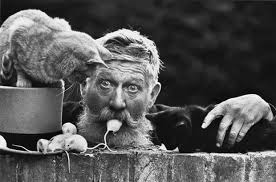
This photo is showing a homeless person looking for food for himself and his cat.
David Bailey:
- He is famous for being a British Photographer who provides photos for journalist to be published.
- Mcullin is from Finsbury park in London.
- Mcullin is a war photographer.
- He became a photographer as when he was in the Air force he was an assitant in the aerial division.
- Mcullin is famous for first publishing a picture in the Observer newspaper in 1964 of a gang of london boys.
- When he served in the airforce he witnessed a lot and wanted to carry on photographing history and events which took place.
- Has Dyslexia

I choose this picture as it highlights what Mcullin photography is about- history. The picture was taken in Bangladesh of a mother and her daughter. The mother looks exhausted as she can not provide for her daughter, e.g. food. Therefore, the photo conveys that Mcullin is proving poverty is a big issue in less economic countries like Bangladesh. Therefore, Mcullin is stating how hard life is if you do not have money to survive.

This photo is showing a homeless person looking for food for himself and his cat.
David Bailey:
- Fashion and portrait photographer.
- Has Dyslexia
- Bailey is from Leytonstone in South East London
- He is 78 years old.
- in 1960 he started working for Vogue as his first job
- He use to work with John French another photographer.
- Bailey loved history which made him feel passionate to become a photographer.
- Bailey uses materials such as shoes to produce a photograph such as the Tongue Shoe.
- Bailey is also known for his artwork such as working with X-man. Bailey was also known as the 60s photographer.

This Photo I choose because Bailey is showing fashion in the 21st century and behaviour. This photo shows Jude Law in a black suit which represents death, however the cigcigerette also shows that Law is portraying that he will die one day anyway from either smoking or age. Bailey has used a celebrity to show style and the behaviour within society.
This photo is of Mick Jagger wearing a fur coat and hood for vogue magazine which Bailey took. I like this photo because it shows in New York there is a cold winter and Mick Jagger is portraying how you should be dressing at this time.

This photo is showing how an old women's bathroom looks with her hair rollers, and toothbrush holder.
William Eggleston:
- USA
- William is 76 years old from Tenessi America.
- Pop art photographer
- Colour photgrapher
- He is known for his photography in the 1960s
- He took many photos in Memphis where he is from
- He is known for a genius in colour photography.
- He takes old photos and uses colour to make it a modern, retro photograph.

This photo I choose because I feel that William is showing an old diner in America, converted into a retro modern diner. But William is still showing the 1960s by the ladies showing old hair styles and holding cigarettes. Also, the brick wall shows the 1960s style but a modern wall.

This photo is showing how an old women's bathroom looks with her hair rollers, and toothbrush holder.
Martin Parr:
- He is a British photographer who collects photo books.
- He is 63 years old from Epsom, Epsom is a small town in Surrey.
- He is a photojournalist.
- His photos are unique and offer us to see the world from his point of view.
- Parr also taught photography in the 1970s
- 2007 Parr was elected to do an exhibition in Singapore Asia
- Parr has also done Photoshoots for the New York times Fashion
- Parr lived in Manchester and then moved to Bristol with his Wife and Daughter
- Parr believes making his photos by using statements based on Society.
- Parr also believes it is important to find the EXTRAORDINARY in the ORDINARY
- We live in a small world where you can take great photos
- To take a good photo you should go up close according to Parr
- Parr says that it is crucial to exaggerate through the photographs taken.
- Parr has also written books and added his photographs

I choose this photo because it shows three kinds of summer, but also shows three types of weather conditions. Parr is portraying in the photo that everyone in the summer experiences different holidays. Firstly the beach shows a sunny,peaceful summer. However, further along in the photo it shows the shallow end of the sea. This conveys it is warm but the weather is changing rapidly. Moreover, the end of the photo shows the sea and clouds hovering over the sea- this highlights that the weather will change for some people during their summer. Lastly, I liked this photo the best as it emphasis how everyone has different summer experiences weather in the sun or rain. This photo was taken in Japan in 1996.
This is another photo which Parr has taken which shows a women in the sun- sun bathing with her jewellery and holding a cigarette. This is interesting as Parr has used the silver jewellery and yellow and pink petal bikini bottoms with red nail polish with the sun focusing on this picture. The sun brings out the colours within this picture.
Subscribe to:
Posts (Atom)